
In the picturesque valley of Drino in southern Albania, nestled against the steep slopes of the Mali i Gjere mountains, lies one of the most unique and best-preserved historic cities in the Mediterranean: Gjirokastër. Famously known as the “City of Stone” and a proud UNESCO World Heritage Site, Gjirokastër enchants every visitor with its fortress-crowned skyline, grand slate-roofed tower houses, and labyrinth of steep, cobbled alleyways that echo with centuries of history.
For travelers exploring Albania with Qato Tours, discovering the architectural majesty and authentic spirit of Gjirokastër is an unforgettable highlight of our multi-day cultural journeys.
A Citadel Built Across the Centuries
The heartbeat of the city is the mighty Gjirokastër Castle, an imposing fortress perched high on a rocky cliff overlooking the entire valley.
- The Fortress Origins: Fortifications on this site date back as early as the 4th century BC, but the castle took much of its current formidable shape during the Ottoman era and later expansions in the 19th century.
- The Military History: Within the castle grounds, visitors can explore vaulted tunnels, old artillery pieces, an aviation museum featuring a captured US spy plane, and sweeping panoramic viewpoints of the surrounding mountain ranges and river valley.
The Labyrinth of the Old Bazaar
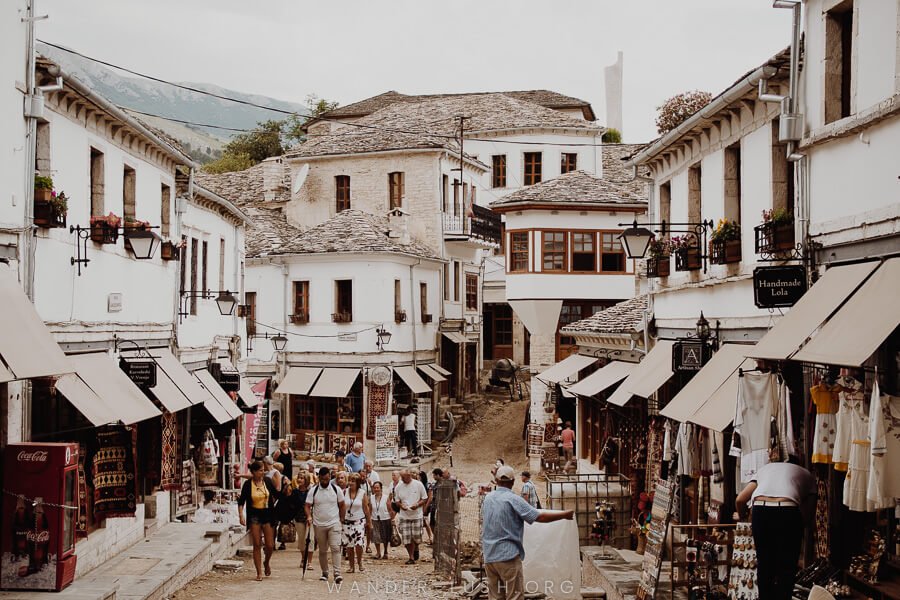
Descending from the castle brings you into the vibrant heart of the city: The Old Bazaar (Pazari Vjetër).
With its intricately patterned black and white cobblestones radiating outward in web-like alleys, the bazaar has served as the commercial and social hub of Gjirokastër for centuries. Today, it remains a bustling cultural zone where local artisans display handcrafted wooden carvings, handmade wool rugs, copper kitchenware, lace, and traditional souvenirs. Strolling through the bazaar feels like stepping back into an Ottoman trading post untouched by modern time.
Masterpieces of Ottoman Architecture: Skenduli House
Gjirokastër is world-renowned for its distinct 17th- and 18th-century “tower houses” (known locally as kullat), built by wealthy Ottoman-era landowners. These fortified dwellings were designed for both defense and grand hospitality.
Among them, the Skenduli House stands out as a magnificent example of preserved heritage. Built in the early 19th century, this grand family home features multiple stories, intricately carved wooden ceilings, frescoed walls, traditional fireplaces, and a clever system of indoor rooms designed for seasonal living. Visiting the house with local guides offers a fascinating glimpse into the aristocratic family life and architecture of historic Albania.
A Cultural Crossroads and Literary Roots
Beyond its architecture, Gjirokastër holds profound cultural significance. It is the birthplace of Albania’s most famous writer, Ismail Kadare, whose novels immortalized the stone city’s misty alleys, political history, and folkloric legends. It is also celebrated for its polyphonic folk singing—a mesmerizing, multi-voiced traditional musical style recognized globally by UNESCO as an intangible cultural masterpiece.
Experiencing Gjirokastër with Qato Tours
Visiting Gjirokastër is a cornerstone of our comprehensive Albanian itineraries. At Qato Tours, based in nearby Berat, our family-led team guides you beyond the surface guidebooks:
- Stroll the historic bazaar and taste authentic local specialties like qifqi (baked rice balls seasoned with herbs).
- Hear the captivating legends of the castle walls and historical merchant families.
- Travel seamlessly through southern Albania with comfortable private transfers and expert local accompaniment.
Join us on our 9-day cultural journey across Albania and let us share the stone magic of Gjirokastër with you!